
String Inverters vs. Microinverters vs. Power Optimizers: An Engineering Comparison
Compare central string inverters, microinverters, and DC power optimizers across MPPT tracking, clipping, thermal derating, and lifecycle maintenance. Includes worked US, UK, and EU roof sizing examples.
Updated 2026-11-20 · 1848 words
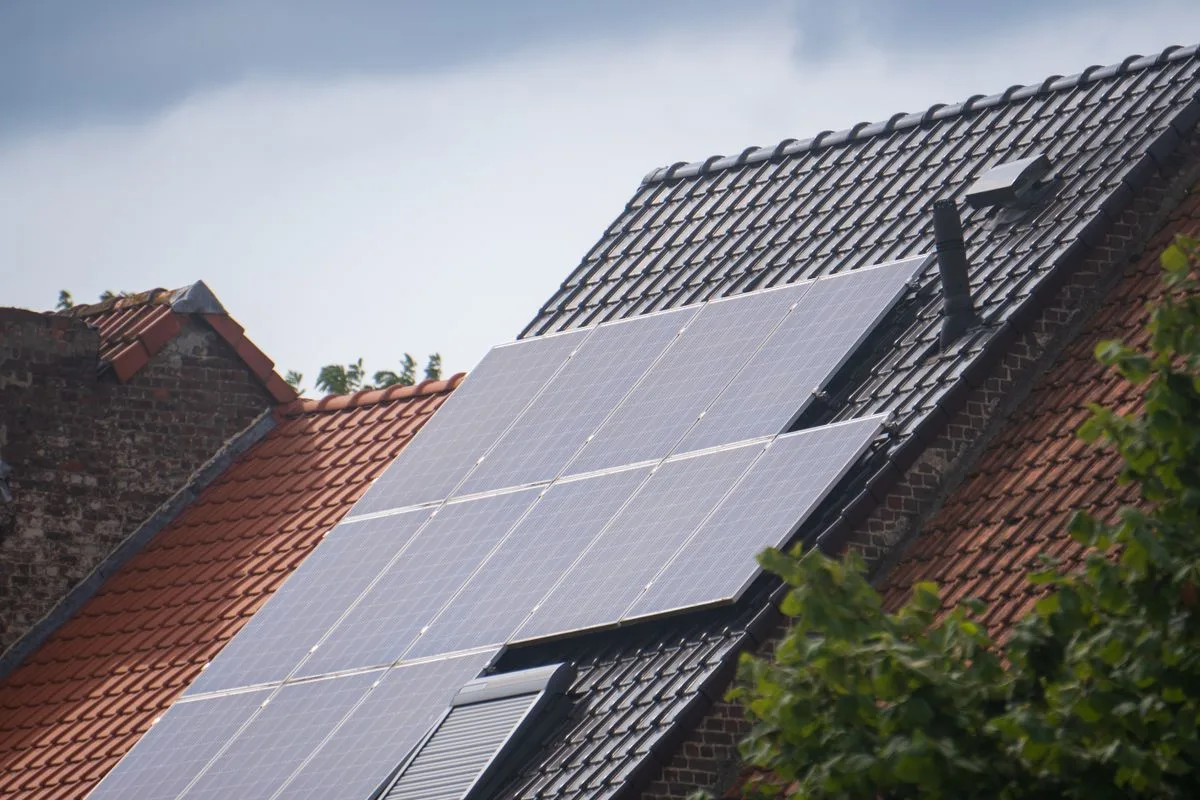
DC-to-AC Architecture: Central String vs. Module-Level Power Electronics
Every grid-tied residential photovoltaic system must convert variable direct current (DC) from silicon solar cells into phase-synchronized alternating current (AC) at 120/240 V (North America) or 230/400 V (UK and Continental Europe). How and where that conversion happens defines the electrical architecture of the entire array. Homeowners generally choose among three topologies: a traditional central string inverter, a central string inverter paired with DC-to-DC power optimizers, or distributed module-level microinverters.
In a central string inverter layout, 6 to 14 solar panels are wired in series into one or more high-voltage DC strings (commonly 300 V to 600 V DC in US residential systems, or up to 1,000 V DC in EU three-phase residential installations). Those strings terminate at a single wall-mounted inverter near the main service panel or garage. Modern residential string inverters typically include two or three independent Maximum Power Point Tracking (MPPT) inputs, allowing two differently oriented roof planes—such as east and west—to operate at separate string voltages.
Microinverters eliminate high-voltage DC home runs altogether. A compact inverter bolted directly beneath each solar module (or shared across two modules in dual-unit designs) performs MPPT and DC-to-AC conversion right on the roof. Parallel 240 V or 230 V AC trunk cables carry grid-synchronized power down to a combiner box. Because each panel operates as an independent AC generator, shading or soiling on one module has zero electrical impact on its neighbors.
DC power optimizers occupy the middle ground. Each panel connects to a roof-mounted DC-to-DC converter that performs module-level MPPT and conditions the voltage and current before feeding a central string inverter. The central inverter still handles the final DC-to-AC inversion, battery DC-coupling (if present), and grid synchronization, while the optimizers prevent a single shaded panel from throttling the current of the entire series string.
Electrical Topology, MPPT Granularity, and Clipping Behavior
Understanding why these three architectures diverge in real-world yield requires examining how series-connected solar cells respond to irradiance mismatches. In an unoptimized string, current is constrained by the weakest cell group in series. Even though modern half-cut monocrystalline modules include three bypass diodes to route current around a shaded third of a panel, activating a bypass diode drops that panel's voltage by roughly 12 V to 14 V. If too many modules in a short string lose voltage simultaneously, the combined string voltage can fall below the inverter's minimum MPPT startup window, causing the entire string to drop offline.
Power optimizers solve the current bottleneck by stepping down voltage and boosting current on shaded panels so they match the unshaded string current, or conversely stepping up voltage to keep the fixed-voltage DC bus stable. Microinverters bypass string math entirely: each 400 W to 440 W panel has its own MPPT loop, typically tracking between 22 V and 55 V DC.
Inverter Clipping and DC-to-AC Ratios
Installers routinely oversize the DC array relative to the inverter's continuous AC output rating—a ratio known as the Inverter Loading Ratio (ILR) or DC/AC ratio. An ILR between 1.15 and 1.30 harvests more morning, late-afternoon, and cloudy-day energy without paying for oversized AC hardware, at the expense of occasional midday "clipping" when irradiance peaks on cool, clear spring days.
- String inverters: Usually paired at a DC/AC ratio of 1.10 to 1.25. Because the entire array shares one AC output ceiling, an east-west split array on a dual-MPPT string inverter rarely clips, since east panels peak around 10:30 AM and west panels peak around 3:30 PM.
- Microinverters: Commonly paired at a higher DC/AC ratio of 1.20 to 1.35. For example, pairing a 430 W DC module with a 349 W continuous AC microinverter yields an ILR of 1.23. On a cool 50 °F (10 °C) spring noon, the module might produce 410 W DC, and the microinverter caps AC export at 349 W—clipping 61 W per module for an hour or two.
- DC optimizers: Follow the central inverter's AC limit, typically 1.15 to 1.30 ILR. However, if a homeowner adds a DC-coupled battery to a hybrid string+optimizer inverter, excess DC power above the AC inverter ceiling can often be diverted directly into battery charging rather than being clipped.
Side-by-Side Engineering and Lifecycle Comparison
The table below summarizes key electrical, thermal, safety, and lifecycle parameters across the three topologies for typical 2026 residential hardware.
| Engineering Parameter | Central String Inverter | String Inverter + DC Optimizers | Module-Level Microinverters |
|---|---|---|---|
| MPPT Granularity | 1 to 3 trackers per array (string-level) | 1 tracker per module (or per 2 modules) | 1 tracker per module (or dual-module) |
| Roof-Level DC Voltage | High (300 V to 1,000 V DC) | High during operation; 1 V per optimizer in rapid shutdown | Low (22 V to 60 V DC module-level only) |
| Peak Conversion Efficiency | 97.5% to 98.6% | 97.0% to 98.0% combined (optimizer + inverter) | 96.5% to 97.5% |
| Partial Shade Tolerance | Low to moderate (depends on bypass diodes & shade algorithm) | High (module-level current matching) | Highest (fully independent AC branches) |
| Typical Hardware Warranty | 10 to 12 years (extendable to 20) | 25 years optimizers; 12 years central inverter | 25 years on microinverters |
| Roof-Level Failure Risk | Zero electronics on roof (inverter in garage/utility room) | Active DC electronics under every panel | Active AC electronics under every panel |
| Battery Coupling Path | High-efficiency DC-coupled hybrid available | High-efficiency DC-coupled hybrid available | AC-coupled only (double conversion loss) |
Worked Regional Scenarios: US, UK, and EU Roofs
Hardware economics and roof geometry vary sharply across North America, the United Kingdom, and Continental Europe. Below are three concrete engineering walkthroughs showing how topology selection changes expected annual yield and 15-year lifecycle cost.
United States Scenario: Complex 2,400 sq ft Hip-and-Gable Roof in Charlotte, NC
Consider a homeowner in Charlotte, North Carolina, with a 2,400 sq ft two-story home whose broken hip-and-gable roof accommodates 20 × 440 W panels (8.80 kW DC) split across three orientations: 8 panels facing south (180°), 6 facing west (270°), and 6 facing east (90°), with afternoon chimney shading and summer ambient temperatures reaching 92 °F (33 °C).
- String inverter constraint: A standard two-MPPT string inverter cannot cleanly host three distinct azimuths without paralleling two unequal orientations, and a 6-panel string may only reach 220 V DC at 140 °F (60 °C) cell temperature—dangerously close to minimum MPPT voltage thresholds.
- Microinverter / Optimizer outcome: Deploying 20 microinverters (366 W AC each, 7.32 kW AC total, ILR = 1.20) or 20 DC optimizers on a single 7.6 kW AC inverter handles all three roof planes effortlessly and satisfies NEC 690.12 module-level rapid shutdown requirements.
- Worked numbers: Under NREL PVWatts baseline conditions for Charlotte (1,420 kWh/kW/year unshaded), the 8.80 kW DC array produces roughly 11,450 kWh/year after orientation adjustments. Microinverters add approximately $1,900 upfront over a bare string inverter ($24,600 vs. $22,700 before incentives), but recover an estimated 680 kWh/year in avoided mismatch and chimney-shade losses. At $0.15/kWh, that is $102/year—plus avoiding a ~$2,200 central inverter replacement at year 12–14.
United Kingdom Scenario: 38 m² South-West Terrace Roof in Bristol
In Bristol, a Victorian terrace home offers 38 m² of usable south-west roof pitch (35° tilt, 215° azimuth), fitting 10 × 440 W panels (4.40 kW DC). Summer peak ambient temperatures hover around 18 °C to 22 °C, and a neighboring dormer casts a shadow across two lower panels between 15:30 and 18:00 from April through September.
- String inverter vs. MLPE: Because all 10 panels sit on one roof plane, a single-phase 3.68 kW AC string inverter (sized to stay within the UK G98 simplified grid connection limit of 16 A per phase, avoiding lengthy DNO G99 pre-approval) gives an ILR of 1.20. Adding two selective DC optimizers only on the shaded panels—or using a string inverter with active shade-management sweep algorithms—often outperforms full microinverters on cost.
- Worked numbers: PVGIS estimates roughly 960 kWh/kWp/year in Bristol, or 4,224 kWh/year unshaded. Dormer shading cuts a bare string inverter's output by about 7.5% (317 kWh/year). Full microinverters cost roughly £1,100 more than a 3.68 kW string inverter (£7,400 vs. £6,300 installed) and recover ~260 kWh/year. At a blended UK self-consumption + Smart Export Guarantee value of £0.21/kWh, £54.60/year in recovered energy takes over 20 years to pay back the £1,100 hardware premium—making a shade-sweeping string inverter or selective optimizers the stronger financial fit unless a 25-year warranty is prioritized.
European Union Scenario: 46 m² Split East-West Roof in Munich
A detached home near Munich, Germany, has 46 m² of unshaded split east-west roof space (30° pitch) holding 16 × 415 W panels (6.64 kW DC: 8 east, 8 west), with summer highs around 24 °C and a three-phase 400 V grid connection.
- Topology fit: With zero tree or dormer shading and only two symmetric roof planes, a dual-MPPT three-phase hybrid string inverter rated at 5.0 kW AC (ILR = 1.33, appropriate because east and west never peak simultaneously) is the engineering gold standard in Central Europe.
- Worked numbers: PVGIS yields roughly 935 kWh/kWp/year for an east-west 30° split in Munich, or 6,208 kWh/year. Because there is no partial shading, microinverters add €1,450 in upfront cost (€10,850 vs. €9,400) while introducing ~1.0% lower peak conversion efficiency (62 kWh/year less) and forcing any future home battery onto an AC-coupled path with an extra 6%–8% round-trip conversion penalty.
Failure Modes, Roof-Level Maintenance, and Thermal Derating
When comparing reliability, engineers weigh single-point failure against fleet failure exposure. A central string inverter is a single point of failure: if its cooling fan, DC bus capacitors, or IGBT power stage fail in year 11, 100% of solar production stops until a technician swaps the wall-mounted unit—a 90-minute ground-level job requiring no scaffolding or roof access.
Conversely, microinverters and power optimizers distribute risk across 10 to 30 separate circuit boards bolted directly beneath solar panels. On a dark roof in Phoenix or Madrid, under-module air temperatures regularly exceed 145 °F (63 °C) at midday. High junction temperatures accelerate electrolytic capacitor aging, even in potted, NEMA 6P / IP67 enclosures. While a single failed microinverter only drops 4% to 10% of array output, replacing it requires climbing onto a pitched roof, unbolting the solar module, swapping the unit, and re-torquing clamps. In the UK and EU, scaffolding regulations can push a single out-of-pocket roof callout above £450 or €500, even when the replacement hardware itself is covered by a 25-year manufacturer warranty.
Thermal derating also affects wall-mounted string inverters. Mounting a string inverter on an unshaded west-facing exterior wall in direct afternoon sun can trigger internal temperature derating above 113 °F (45 °C), throttling AC output right when grid demand peaks. Installing string inverters inside a ventilated garage, basement, or shaded north-facing wall eliminates thermal throttling entirely.
Installer Selection and Technical Specification Checklist
Before signing a solar installation contract, verify these engineering details against your roof layout and local electrical code:
- Confirm whether local code (such as NEC 690.12 in the United States) mandates module-level rapid shutdown, which favors microinverters or optimizers with built-in shutdown transmitters.
- Request a string-sizing sheet showing minimum and maximum string voltages across your site's record winter low and summer high temperatures.
- Compare the 15-year total cost of ownership, factoring in one central string inverter replacement (~$1,800–$2,500 / £1,100–£1,500 / €1,300–€1,800) versus roof-access labor warranties on MLPE hardware.
- If you plan to add a home battery within five years, confirm whether a DC-coupled hybrid string inverter avoids double AC-DC-AC conversion losses.
- Ask for the inverter's acoustic rating (in dBA) if a string inverter will be mounted near a bedroom or living space wall.
Engineering and Safety Disclaimer
Yield estimates, clipping percentages, and cost figures in this comparison are illustrative engineering models based on typical NREL PVWatts and European Commission PVGIS solar profiles; actual electricity generation and utility bill savings depend on local tariffs, weather variability, roof framing, and household load timing, and cannot be guaranteed. Designing DC string voltages, configuring rapid-shutdown circuits, and connecting grid-tied inverters involve lethal voltages and must only be performed by licensed electricians or accredited solar PV installers in compliance with local electrical codes.