
Dynamic Hourly Electricity Pricing: When Automation Saves Money
Learn how hourly and half-hourly dynamic electricity tariffs pass wholesale market swings to your smart meter, and when automated appliance scheduling pays off. Includes worked US, UK, and EU tariff calculations plus an automation readiness checklist.
Updated 2026-11-21 · 1628 words
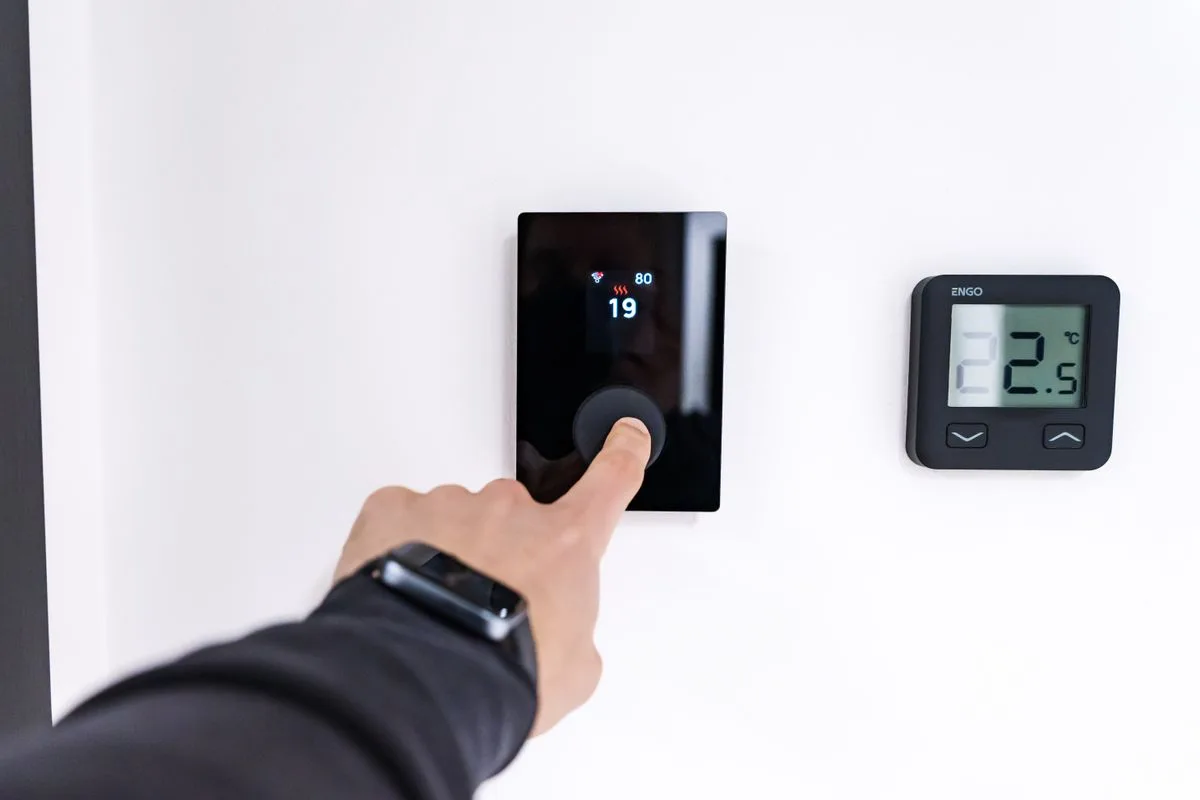
How Wholesale Spot Markets Reach Your Home Smart Meter
Traditional residential electricity plans shield households from short-term market volatility by averaging wholesale power costs over six to twelve months. Under a dynamic hourly or half-hourly tariff, that buffer disappears. Instead of paying one flat rate per kilowatt-hour (kWh) around the clock, your meter records consumption in 15-, 30-, or 60-minute intervals and multiplies each block by a price tied directly to day-ahead or real-time wholesale power auctions.
In the United States, utility-run programs such as ComEd Hourly Pricing in Illinois and Ameren Illinois Power Smart Pricing pass PJM and MISO locational marginal prices directly to residential customers with interval smart meters. Across the United Kingdom, suppliers like Octopus Energy offer half-hourly tariffs such as Agile, which publishes 48 settlement prices each afternoon for the following day based on EPEX SPOT and N2EX auctions. Within the European Union, the Electricity Market Directive requires large suppliers in member states with smart meter rollouts—including Germany, the Netherlands, Spain, and the Nordic countries—to offer dynamic contracts indexed to Nord Pool or EPEX SPOT day-ahead clearing prices.
Because wholesale prices fluctuate with wind output, solar irradiance, natural gas prices, and grid congestion, dynamic tariffs create wide daily spreads. During windy Sunday afternoons or overnight lulls, wholesale electricity can drop near zero or even turn negative when generators pay to avoid shutting down thermal plants. Conversely, on still, freezing weekday evenings between 16:00 and 20:00, scarcity pricing can push unit rates three to five times higher than a standard flat tariff.
The Anatomy of a Dynamic Tariff: Floor, Ceiling, and Adders
A common misconception is that a headline wholesale spot price of $0.02/kWh or €0.01/kWh means your total bill for that hour is almost free. In reality, your metered dynamic rate consists of two distinct layers: the variable energy commodity component and a stack of fixed or volumetric non-commodity charges.
- Wholesale Spot Clearing Price: The hourly or half-hourly auction price from the regional power exchange (e.g., PJM, EPEX SPOT, Nord Pool). This is the only piece that moves every hour.
- Supplier Margin and Balancing Fee: A small per-kWh adder (often $0.01 to $0.03/kWh, £0.02/kWh, or €0.015 to €0.025/kWh) plus a fixed daily standing charge or monthly subscription fee.
- Regulated Grid and Distribution Charges: Transmission and distribution network fees, which remain fixed per kWh or per day in most jurisdictions, though some European grids now add time-differentiated network surcharges.
- Taxes, Levies, and VAT: Renewable energy levies, capacity market charges, and value-added tax (such as 5% VAT in the UK or 19%–25% VAT across EU states), which often apply on top of the combined energy and grid total.
Because grid fees and taxes rarely turn negative, a wholesale spot price of -€0.03/kWh in the Netherlands or Germany might still result in a net retail cost of €0.11/kWh once €0.14/kWh of energy tax and grid fees are added. Only when the negative wholesale price exceeds all volumetric adders does the customer actually earn a net credit for consuming power.
Worked Tariff Walkthroughs: US, UK, and EU Households
To see where automation makes or breaks a dynamic tariff, consider three households with identical smart-home capabilities shifting flexible loads—an electric vehicle (EV) charger, a heat pump water heater, and a dishwasher—out of evening peak hours into low-cost overnight or midday solar windows.
United States Example (ComEd-Style Hourly Pricing in $)
Suppose a suburban household in northern Illinois consumes 900 kWh per month. On a standard fixed utility supply rate of $0.145/kWh (all-in delivery plus supply, excluding the $14.00 monthly customer charge), the volumetric electricity bill is:
900 kWh × $0.145/kWh = $130.50/month (plus $14.00 fixed fee = $144.50).
Now suppose the household switches to hourly pricing. Without automation, 350 kWh of their usage—cooking, EV charging right after work at 17:30, and electric water heating—lands during the 16:00–20:00 peak when all-in hourly rates average $0.240/kWh. The remaining 550 kWh averages $0.115/kWh. Their unshifted hourly bill becomes:
(350 × $0.240) + (550 × $0.115) = $84.00 + $63.25 = $147.25 (plus $14.00 fixed = $161.25, or $16.75 worse than flat).
With automated scheduling, they shift 280 kWh (EV charging and water heating) to 01:00–05:00 when hourly all-in rates average $0.072/kWh, leaving only 70 kWh in the evening peak:
(70 × $0.240) + (280 × $0.072) + (550 × $0.115) = $16.80 + $20.16 + $63.25 = $100.21 (plus $14.00 = $114.21, saving roughly $30.29/month compared with the flat rate in that sample month).
United Kingdom Example (Half-Hourly Agile-Style Tariff in £)
Consider a UK home using 380 kWh per month against a standard variable tariff benchmark of £0.245/kWh and a standing charge of £0.60/day (£18.00 for a 30-day month). The flat-rate baseline bill is:
(380 × £0.245) + £18.00 = £93.10 + £18.00 = £111.10/month.
On a half-hourly dynamic tariff, the 16:00–19:00 weekday peak averages £0.420/kWh, overnight 00:00–05:00 averages £0.110/kWh, and shoulder hours average £0.215/kWh. If automation moves 140 kWh of EV charging, laundry, and immersion water heating into the overnight slot, keeps 200 kWh in shoulder hours, and limits evening peak draw to 40 kWh:
(40 × £0.420) + (140 × £0.110) + (200 × £0.215) + £18.00 = £16.80 + £15.40 + £43.00 + £18.00 = £93.20/month.
That represents an illustrative £17.90 monthly reduction, whereas failing to automate—and drawing 120 kWh at £0.420/kWh during dinner prep and EV plug-in—would push the bill to £120.20, exceeding the standard tariff.
European Union Example (Day-Ahead Indexed Contract in €)
In Germany or the Netherlands, fixed taxes and network charges account for roughly €0.180/kWh regardless of the hour. Suppose a household consumes 420 kWh/month compared with a fixed contract at €0.340/kWh plus a €12.00 monthly base fee (420 × €0.340 + €12.00 = €154.80).
Under an hourly EPEX SPOT contract with a €0.020/kWh supplier markup, the non-spot floor is €0.200/kWh. During midday solar surpluses (11:00–15:00), spot prices average €0.030/kWh (€0.230/kWh all-in); overnight averages €0.065/kWh (€0.265/kWh all-in); and evening peaks average €0.210/kWh (€0.410/kWh all-in). By automating a 160 kWh EV/heat-pump load into the midday and overnight windows and holding peak usage to 50 kWh (with 210 kWh in shoulder hours at €0.290/kWh all-in):
(50 × €0.410) + (160 × €0.245 blended) + (210 × €0.290) + €12.00 = €20.50 + €39.20 + €60.90 + €12.00 = €132.60/month.
Which Appliances Actually Pay Off Under Automation?
Not every device in a home justifies the cost of smart plugs or home energy management controllers. Automation only delivers meaningful savings when an appliance combines high wattage, meaningful daily run-time, and thermal or battery storage so shifting its run-time does not disrupt household comfort.
| Appliance / Load | Typical Power Draw | Shiftable Daily Window | Automation Method | Dynamic Pricing Payoff Potential |
|---|---|---|---|---|
| Level 2 EV Charger | 7.0 – 11.0 kW | 8 – 14 hours overnight | OCPP smart charger or vehicle API | High: Single largest flexible load; easily captures lowest 3–4 hours |
| Home Battery Storage | 3.0 – 5.0 kW | 24 hours (charge low, discharge peak) | Inverter EMS + day-ahead price feed | High: Eliminates 16:00–20:00 peak imports entirely when sized well |
| Heat Pump Water Heater | 0.5 – 4.5 kW | 4 – 8 hours (thermal tank buffer) | CTA-2045 port, SG Ready, or timer | Moderate-High: Pre-heats tank to 60°C during cheap midday/night hours |
| Space-Heating Heat Pump | 1.5 – 4.0 kW | 1 – 3 hours (pre-heat/pre-cool) | Smart thermostat + weather compensation | Moderate: Limited by home insulation; works best in well-insulated homes |
| Dishwasher & Washing Machine | 1.2 – 2.2 kW | 4 – 10 hours (delay start) | Built-in delay timer or smart relay | Low-Moderate: Small kWh per cycle (0.8–1.5 kWh), but free to shift |
| Refrigerator / Freezer | 0.1 – 0.2 kW | Not recommended | None (continuous food safety load) | Negligible: Defrost cycles are tiny; turning off risks food spoilage |
Automation Hardware and Control Protocols That Work
Manual monitoring—checking an app every evening and setting appliance timers by hand—rarely lasts beyond the first month. Reliable savings depend on closed-loop automation where your home controller fetches tomorrow's published hourly prices and builds an optimal run schedule automatically.
- EV Chargers (OCPP and OEM APIs): Look for chargers supporting Open Charge Point Protocol (OCPP 1.6J or 2.0.1) or direct supplier integration (such as Octopus Intelligent or Tibber). You set a departure time and target state of charge—for example, 80% by 07:00—and the platform charges during the cheapest non-contiguous slots.
- Heat Pumps (SG Ready and OpenTherm): European air-to-water heat pumps often include "Smart Grid Ready" (SG Ready) dry contacts. A cheap Wi-Fi relay connected to Home Assistant can trigger the "boost" state when hourly prices drop below a set threshold, storing extra thermal energy in your buffer tank or screed floor.
- Open-Source Home Energy Management: Platforms like Home Assistant paired with community integrations (such as EMHASS or Nord Pool/EPEX sensors) let tech-savvy homeowners orchestrate batteries, water heaters, and EV chargers locally without paying recurring cloud subscription fees.
- Fail-Safe Overrides: Every automated rule needs a hard comfort override. If an EV must leave early or a cold snap hits, a single tap should bypass price optimization without requiring you to re-program schedules.
Pre-Enrollment Readiness Checklist
Before switching from a fixed or standard Time-of-Use plan to an hourly dynamic tariff, run through this readiness audit:
- Confirm Interval Smart Meter Activation: Verify with your utility or supplier that your smart meter is actively transmitting 15-, 30-, or 60-minute interval reads—not just monthly totals.
- Measure Your Unshiftable Evening Peak Load: Track how much electricity you use between 16:00 and 20:00 for cooking, lighting, and electronics. If more than 35% of your total kWh falls in those four hours and cannot be moved, a dynamic tariff may raise your bill.
- Check Tariff Price Caps and Exit Fees: Ask whether the contract includes a maximum hourly price ceiling (such as £1.00/kWh on some UK plans) or exposes you to uncapped wholesale spikes during grid emergencies.
- Calculate Hardware Payback Separately: If you must spend $600 or €500 on smart relays and a new charger just to chase hourly spreads, verify that the expected annual spread justifies the hardware outlay.
- Ensure Household Buy-In: Automated delay-starts fail if family members override schedules out of habit or run tumble dryers during peak pricing alerts.
Risk Management and Tariff Disclaimers
Dynamic pricing transfers wholesale market risk from the utility to the homeowner. During prolonged cold snaps, low wind periods (known in Europe as Dunkelflaute), or unplanned power plant outages, hourly spot prices can stay elevated for days at a time. Households with electric resistance heating and poor insulation are particularly vulnerable to winter bill shocks if they cannot curtail demand.
Educational Disclaimer: All tariff rates, hourly spreads, and monthly bill calculations in this guide are illustrative scenarios based on typical US, UK, and EU market structures. Wholesale electricity prices fluctuate continuously and are never guaranteed; dynamic pricing does not ensure lower utility bills for every household and should be evaluated against your local supplier's published terms and historical interval usage.